Veepee · Research · Service design · B2B
One entry point to sell across Europe
Unifying a partner experience fragmented across acquired companies, cutting onboarding from 7–8 weeks to 2–3 on average.
- Role
- Senior Product Designer & Researcher
- Team
- Lead PM, engineering leads and multiple stakeholders, distributed across Paris, Barcelona, Seville and Brussels
- Timeline
- 2021 – 2022
I was brought in to map the end-to-end partner landscape and set the design direction, working with designers who owned the individual tools and products I audited.
Context
Veepee, Europe's flash-sales leader, was building something new: a permanent catalog where brands could sell year-round, from small brands onboarding on their own to large partners like L'Oréal or Monoprix supported step by step.
Veepee had grown by acquiring competitors in Spain, Italy and Belgium. Each kept its own tools, processes and terminology. They did roughly the same work, but not in the same way. So a brand that started selling with us in Spain couldn't easily expand to France or Italy, and the promise we wanted to sell, one entry point to sell across Europe, wasn't possible yet.
How I worked
Making the fragmentation visible
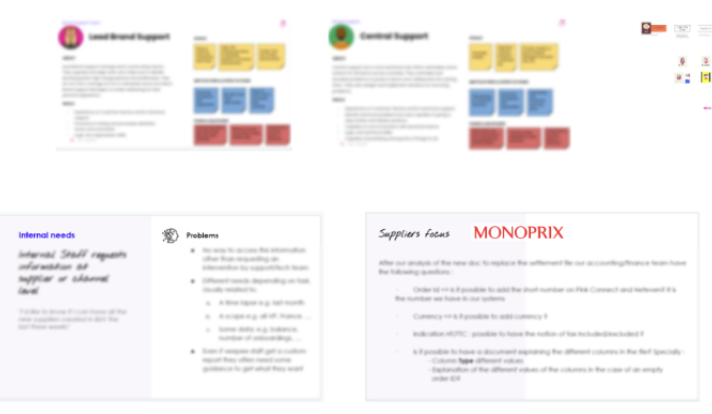
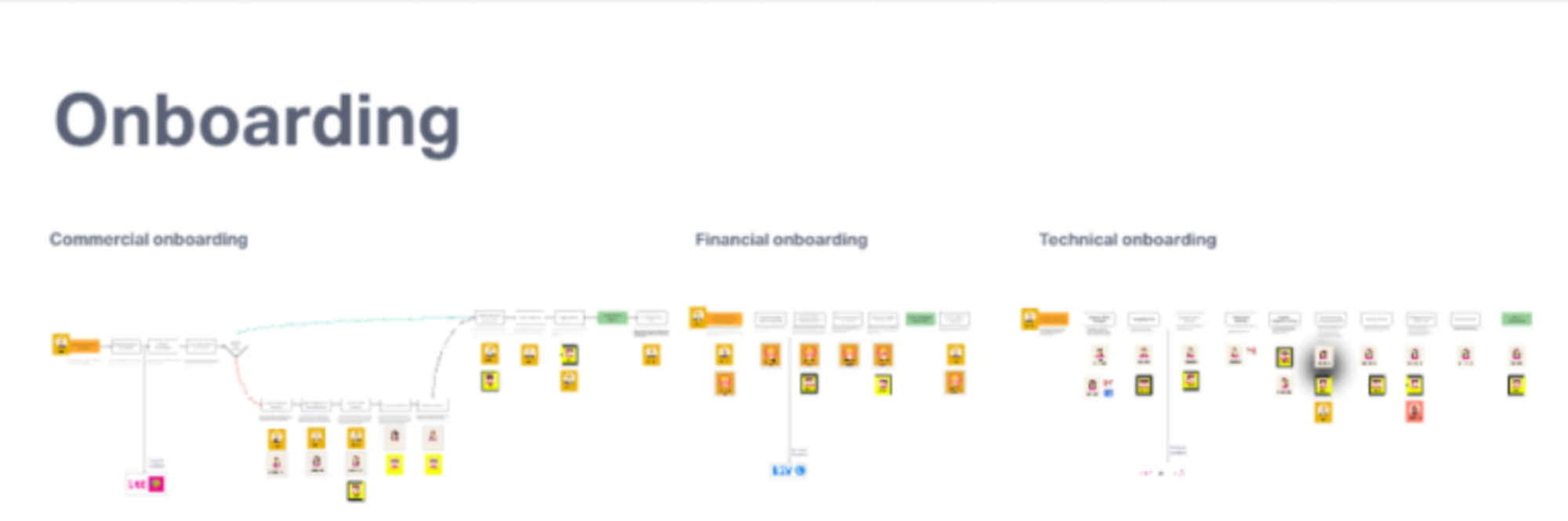
Nobody had the full picture. Each team saw its own piece. So I built a map of the whole landscape: every system and actor involved in onboarding, in one large annotated board, with the key pains and opportunities for each internal role and the quirks of each system.
It started with interviews, then became co-creation: I worked with the leads of internal teams, like Brand Support managers, and with the teams connecting our strategic partners to Veepee. Each area linked to the workshop outcomes where teams set their own priorities. Alongside it, I mapped the journey of strategic partners like L'Oréal, to show the same process from their side.
The map gave everyone one shared view to set priorities against, and made the bottlenecks impossible to miss. Two stood out: carrier setup, and the master app, which partners had to complete before any other tool would work for them.
Findings
What the research uncovered
Onboarding took 7–8 weeks on average. Not because of one big blocker, but because of many small ones stacking up across countries and teams.
Every country meant starting over. Expanding a brand to a new market meant a different local team, different tools, and steps that didn't work quite the same way.
Shipping setup wasn't coordinated well. Carrier configuration, the delivery options each partner could offer, ran through third-party tools, and our checks on it were fragile. When something went wrong there, nobody found out, which led straight to the next problem.
Accounts stalled silently. Notifications didn't reach the right people, so a partner's account could sit on hold for days until someone in Brand Support happened to notice.
Partners didn't know it was their turn. We had a central app where partners entered their information to unlock the next steps: catalog import, configuration in other systems. But the sequence wasn't clear. Partners waited for us, while we were waiting for them.
Key decisions
One place to configure, with clear next steps
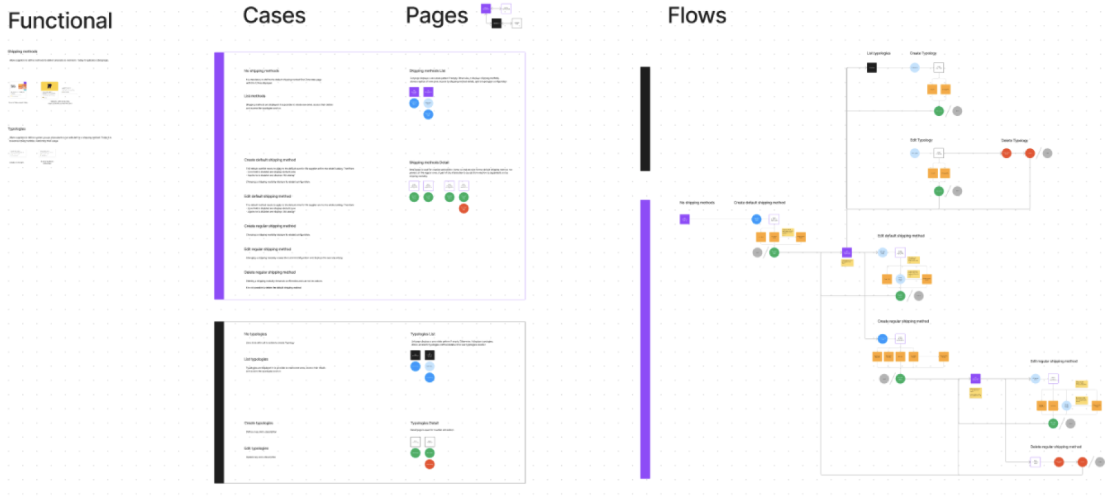
We centralized configuration in the master app and redesigned it around what partners needed to understand: where they were, what was on them, and what was on us. Better feedback at every step meant partners stopped waiting on actions that were theirs to take.
Alerts that reach both sides
Carriers varied by country, and each could request actions at any point. We built a unified alert system: when an action was needed, both the brand and the right internal person (Brand Support or the Key Account Manager) were notified. Accounts stopped stalling silently.
Unify the experience, not the systems
Each country's systems handled carriers slightly differently, and we kept rebuilding the same integrations in parallel. I pushed hard for a single unified layer for the most common carriers, rather than keeping a separate setup per country.
The trade-off: more upfront work, and closer dependence on a handful of major European carriers. What we gained: centralized management, a flow partners could actually understand, and much faster onboarding.
We applied the same pattern to stock: a master app giving partners one view across markets, even when the underlying tools stayed local.
Impact
What design moved
average partner onboarding time
Driven by: Clear next steps in the master app (decision 1), alerts to both sides (decision 2) and the unified carrier layer (decision 3).
fewer Brand Support tickets
Driven by: Partners knowing what was on them (decision 1), and alerts reaching the right person (decision 2).
Where the business went
- Major partners onboarded
- 3: L'Oréal, Ubaldi, Monoprix
- Smaller partners onboarded
- ~20
What I'd do differently
Filter requests against the priorities we'd agreed. I gave too much weight to requests from business development. They were focused on closing deals, and some of what we built for them didn't move the partner experience. The map already showed what mattered most; I'd use it to say no sooner.
Plan the map's lifespan from the start. It was a static artifact that needed constant upkeep. It was the right tool to align everyone at one moment, but not to steer the project over time. I'd have been clearer about that from day one, and set up a lighter way to track progress alongside it.
Get in touch if you want to go deeper.